 Image 1 of 1
Artist: $ @ K ¥
2026
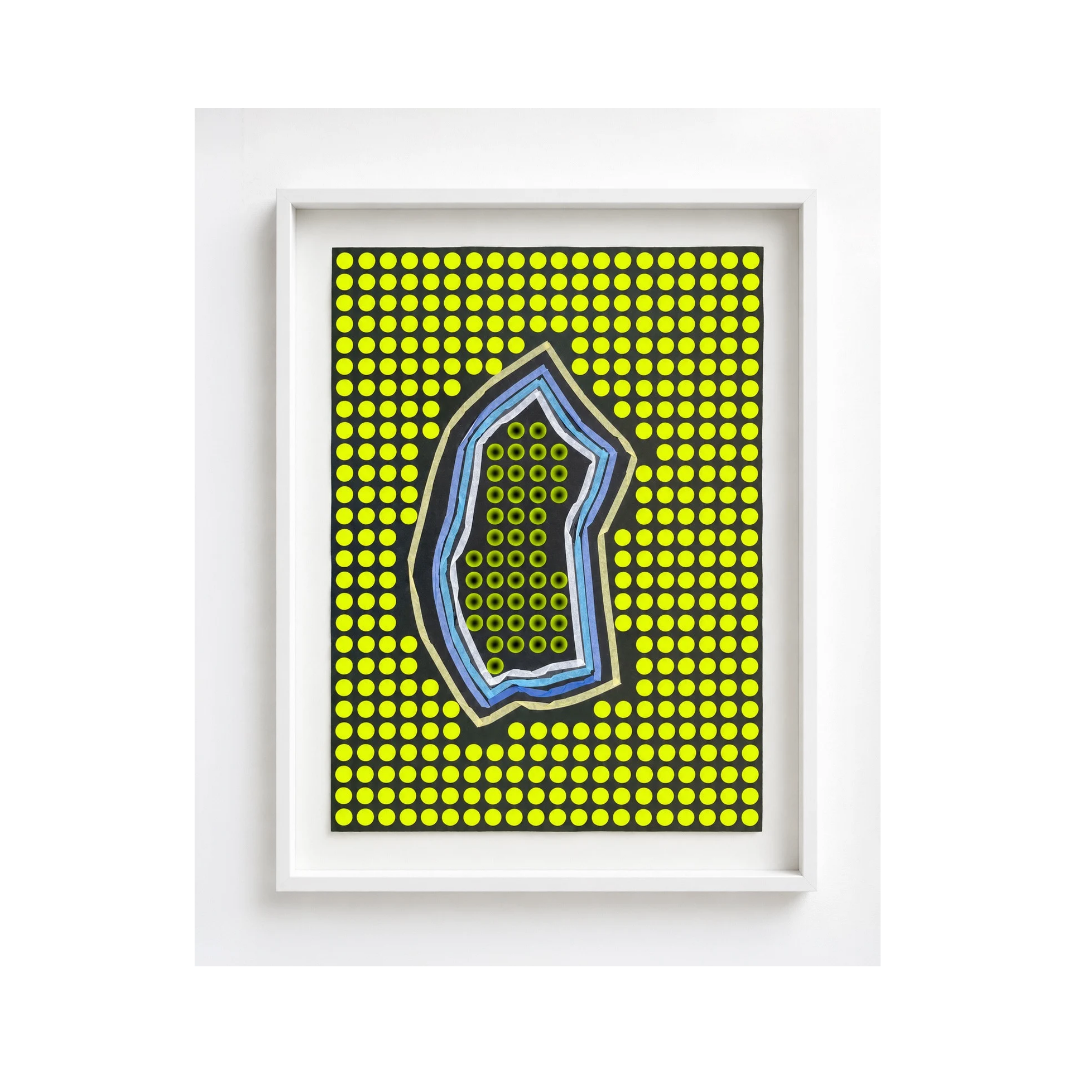
Paperboard, Washi Tape and Laser printed inventory stickers
20 x 28 in
Portal II began with a photograph taken by the artist years earlier, during a moment of profound emotional pain when he felt as though the doors within himself had opened, exposing everything he carried inside.
Years later, while intuitively following the image's forms and recreating its internal shapes with washi tape, the artist realized he was mapping the opening of a portal. As the composition developed through successive colors, what had once been experienced as pain revealed itself as a moment of expansion and transformation.
The artist then surrounded the portal with light, evoking Broadway marquees and the illuminated mirrors of actors' dressing rooms. These lights frame the work with a sense of anticipation, possibility, and emergence.
At its center, however, the light remains deliberately dimmed. Much like the original photograph, whose interior was not entirely clear, the central illumination is partially veiled, allowing light to emerge gradually.
This veil reflects the emotional state captured years earlier: a moment when transformation had become possible, but its promise remained unrealized. The portal had opened, yet what lay beyond it was still uncertain.
Artist: $ @ K ¥
2026
Paperboard, Washi Tape and Laser printed inventory stickers
20 x 28 in
Portal II began with a photograph taken by the artist years earlier, during a moment of profound emotional pain when he felt as though the doors within himself had opened, exposing everything he carried inside.
Years later, while intuitively following the image's forms and recreating its internal shapes with washi tape, the artist realized he was mapping the opening of a portal. As the composition developed through successive colors, what had once been experienced as pain revealed itself as a moment of expansion and transformation.
The artist then surrounded the portal with light, evoking Broadway marquees and the illuminated mirrors of actors' dressing rooms. These lights frame the work with a sense of anticipation, possibility, and emergence.
At its center, however, the light remains deliberately dimmed. Much like the original photograph, whose interior was not entirely clear, the central illumination is partially veiled, allowing light to emerge gradually.
This veil reflects the emotional state captured years earlier: a moment when transformation had become possible, but its promise remained unrealized. The portal had opened, yet what lay beyond it was still uncertain.